Continuing with my notes for YES, YOUR SERPENTINE EXCELLENCY, this section is more content-oriented. Herein I detail some personal touches that influenced my creative decisions.
Personal Touch #1: Life imitates art
In the lull between writing the first and second chapter, my cat died. It was traumatic, a sudden downturn in her health that I could neither prevent nor fix. When I started Chapter 2, I gave my main character two cats in her honor and as a form of therapy for myself. I had zero cats for the following year.
By the time I finished the draft, though, like my heroine, I had two cats. One is mine, kidnapped off the streets she was living and scavenging on for two years. The other is my sister’s, a sort-of foster who will be reunited with her family when they’ve settled in their new home. (Interstate move, buying and selling houses, etc.)
The only other time I’ve had two cats, one lived exclusively outside and loved it, because she hated people, the indoors, the second cat, and everything other than her food. So, the experience wasn’t the same. I don’t know how long I’ll have two now. It’s just funny how they flowed into my life, like I manifested them through writing.
Now if only that type of manifesting worked for attractive love interests…
Personal Touch #2: Family Ties
I’ve written large families before, but not any as large as the Marlows1. The dynamics involved come directly from my personal experiences—not that I modeled this fictional family on my own, but that I drew easily from patterns I’ve known since my infancy.
Both of my parents come from big families, as did each of their parents. Thus, I grew up with an abundance of cousins, first and second. Whenever the adults gathered, the kids played: freeze tag, capture the flag, spin the statue, crack the whip, red rover, and so forth. And somehow, it was almost always in a front yard, not a back one. You knew you were growing up when you sat inside to eavesdrop instead of running semi-feral in the Arizona heat.
Large extended families have unique dynamics. They are simultaneously up in everyone’s business but also oblivious to certain details. It’s easy to pass unnoticed in the crowd, but if anything goes wrong you have a built-in army that will rally around you.
Also, there’s a funny balance between individualism and belonging to a collective. While you are your own person, you are also a [applicable family surname], and that carries significant weight in your identity.
A family well organized
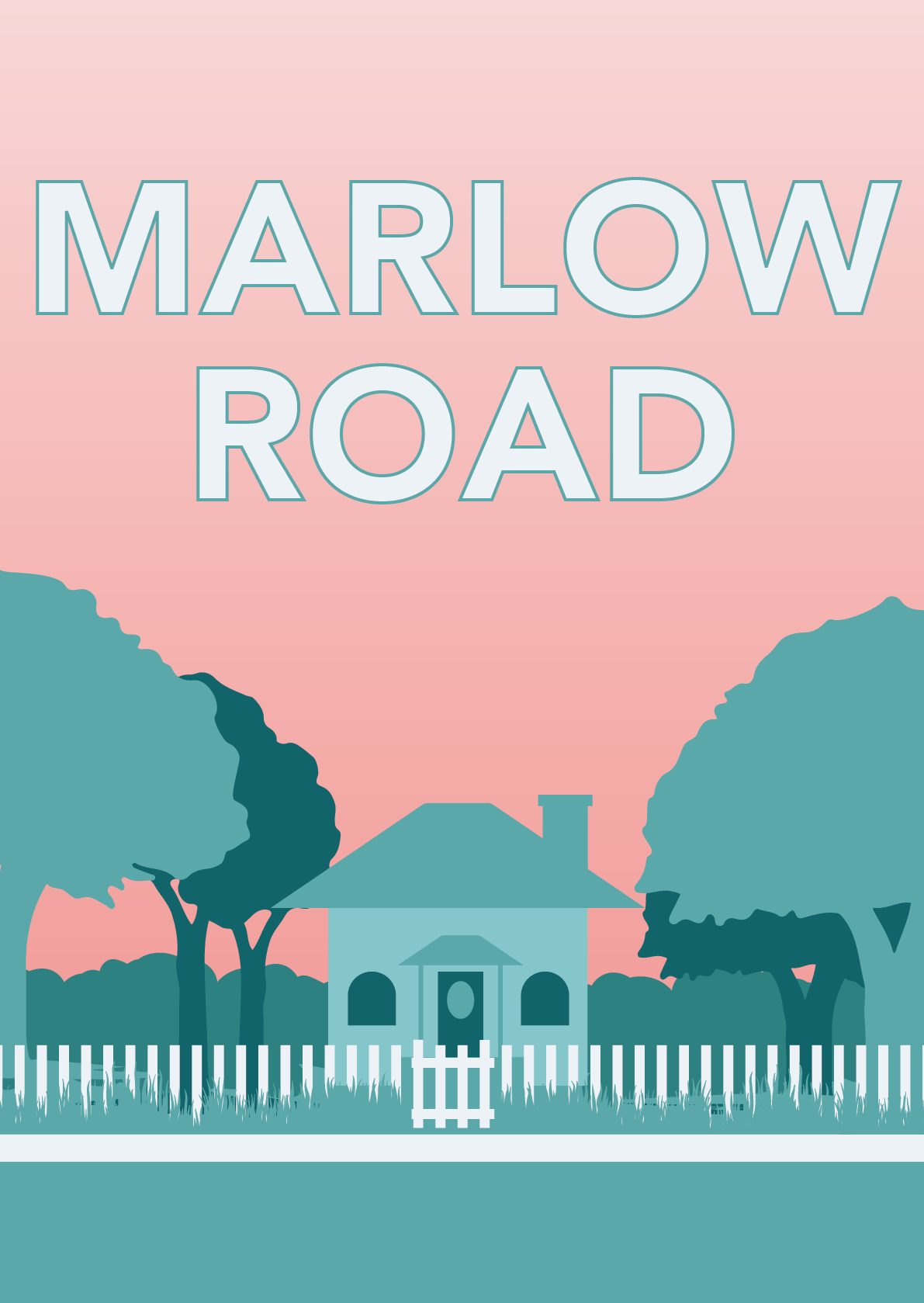
The Marlows have a double layer of this dynamic at play. Their numbers alone create that individual-collective state, but they’re also an immigrant family that did not wholly naturalize into their new country’s culture. Their grandparents came to Elsidor from Beraicha with targets on their back. This led to insularity in their new land, a lack of trust toward strangers, and first-hand understanding that the rulers who once favored them might turn against them one day.
So, they organized their family structure accordingly.
All the houses on Marlow Road belong to the family, with designated occupants/caretakers approved by the family trustee—a position currently held by Aunt Augusta. Marlows can and do live beyond that neighborhood. Those who choose to remain understand that they’re part of a community.
In Joanna’s case, Marlow Road is the safest place for her. She has openly defied the crown, and her mere existence poses a threat to the overly paranoid crime syndicates. She can live in peace with her cats specifically because she’s surrounded by a couple hundred eyes and ears on constant alert.
The downside of this arrangement? Those eyes and ears are also on her. But while her family does meddle, ultimately, she faces no real consequences when they disapprove of her decisions. Their meddling comes not from a desire to control but instead from a concern for safety—individual and collective.
As enmeshed as the Marlows might appear, they do respect one another’s agency.
Much like all of my extended families.
Personal Touch #3: Going where no one should go
As a disaffected youth, I honed a razor-sharp tongue and a quickness to insult. Age has taught me temperance. Specifically, within my writing I try to curtail this dubious skill. One of my personal, ongoing worries is that Sarcasti-Kate will rise and inadvertently shred someone with her pointed teeth.
That being said, I kind of hit pause on that temperance for this book. Joanna has a sarcastic streak, which means the narrator has a sarcastic streak. Much of this sarcasm gets directed at power structures—the crown, the police, etc.
However, one character gets mocked for his appearance, and it’s not nice. The people mocking him know it’s not nice, and they acknowledge it’s not nice. But they do it anyway, because that’s an outlet to vent their frustrations toward him. (They don’t do it to his face. They’re at least that civil.)
I thought about editing it out, because mean commentary on people’s appearance is low-hanging fruit. However, I also think it’s destructive to pretend that everyone is beautiful even when they’re not. It should be fine to note aesthetic preferences and observations instead of pretending that my characters are above that kind of petty judgment.
If I can describe one character as beautiful, I should be allowed to describe another as ugly.
I can’t write anything I haven’t thought, though, so mea culpa on my insults and mean descriptions, even if they only apply to fictional people instead of real ones.
For the record, Thumb-in-wig’s flaw is not his appearance but his unfounded entitlement.
A bit of cultural commentary
Ultimately, I included him to address a cultural assumption that women are shallow and/or cruel for rejecting men based on looks. No one ever questions the reverse. If a man doesn’t find a woman attractive, he simply acts like she doesn’t exist. Traditionally, though, women have been expected to respond with politeness, civility, and perhaps even encouragement to any male attention they receive, whether wanted or not2. This has led so many women into dangerous situations, tricked them into ignoring gut feelings, and often ends in victim-blaming when something dire inevitably occurs.
So, I think it right to model good boundary-setting in fiction. “No, I’m not interested in that person. The reason doesn’t matter. Don’t try to orchestrate anything between us. I don’t care that you think they’re nice. I’d rather die alone with my cats.”
When it comes to matters of the heart, both sexes can be choosy.